Case study · BAKARA · 2026
A batik kiosk that reads the cloth and tells its story
BAKARA is a kiosk for batik: a visitor pairs a phone, photographs a cloth, and the motif arrives on a live try-on screen with its region, century and technique attached.
The problem
Batik knowledge lives in museums, in families and in cloth you cannot touch through a screen. Most AR try-on treats a pattern as a texture: it flattens the meaning, and it falls apart the moment the cloth is at an angle. An exhibition kiosk gets one chance, in a crowd, with a visitor who will not read instructions.
What I built
Designed and built the kiosk interface and its content, from the first screen to the share flow.
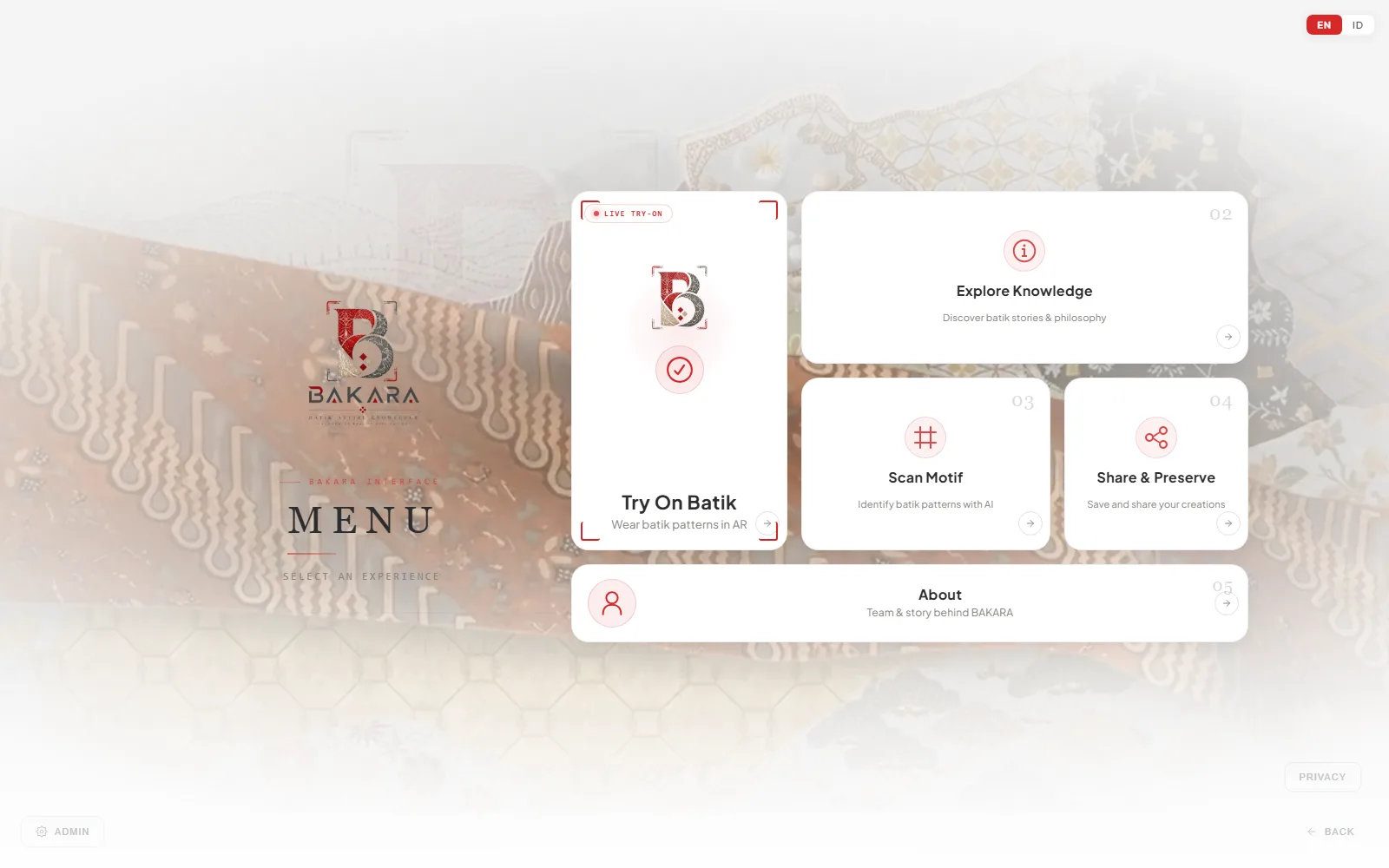
- Eight screens: landing, idle, menu, live try-on, phone scanner, result preview, share and about
- Phone-to-screen pairing: the try-on screen prints a six-digit code, the phone enters it on the scanner screen and photographs the cloth, and the motif appears on the kiosk
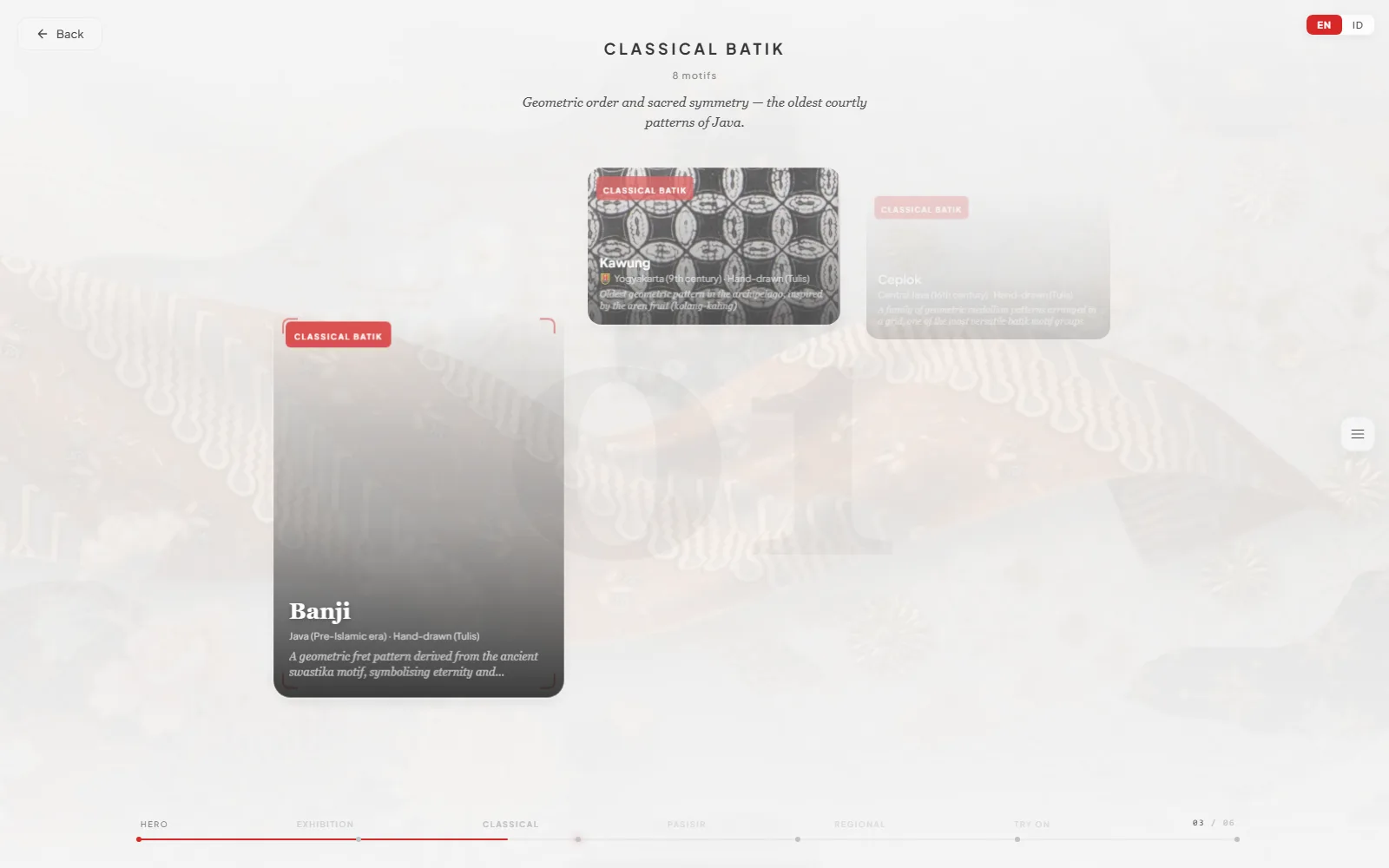
- A knowledge layer behind every look: 18 motifs across 8 regions and 12+ centuries, each with origin, technique and a plain-language story
- EN/ID copy at kiosk scale, with type and touch targets sized for a visitor standing in front of a screen
- A visual system: heritage red, off-white paper, serif display type, batik pattern held at low opacity so the visitor's cloth stays the subject
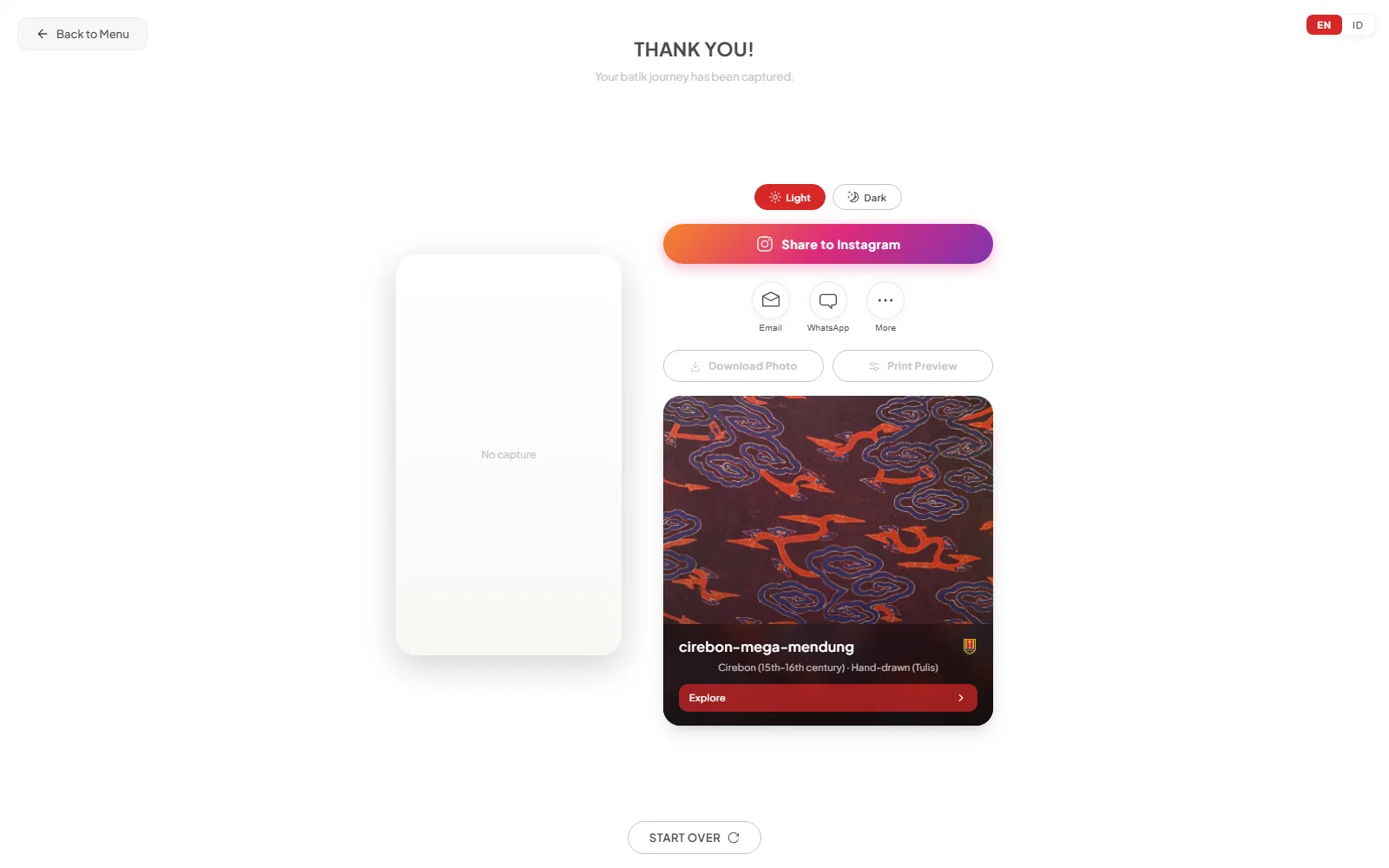
- A result screen that keeps the attribution - motif name, region, century, technique - then offers print, download and share
- The AR layer on Snap Camera Kit, so the motif is a tracked lens rather than a still pasted over the feed
Three decisions
- The phone is a scanner, not a second app
No install and no account: the visitor uses the phone already in their hand. The cost is a pairing step, and a kiosk that has to wait for a second device.
- AR as a lens, not a texture
A vendor SDK and a lens build to maintain, in exchange for tracking that holds when the visitor moves. A static overlay would have been cheaper and would have looked wrong in the first second.
- Teach before the mirror
Motif cards with region, century and technique sit behind the try-on. That is more content to author, but a visitor leaves knowing what they wore instead of just seeing a filter.
Evidence
Live at bakara.id, captured 2026-11-02: eight routes, two languages, 18 motifs, 8 regions, 12+ centuries. A motif card carries what the experience is selling - Cirebon Mega Mendung, 15th-16th century, hand-drawn - not just a name and a colour.
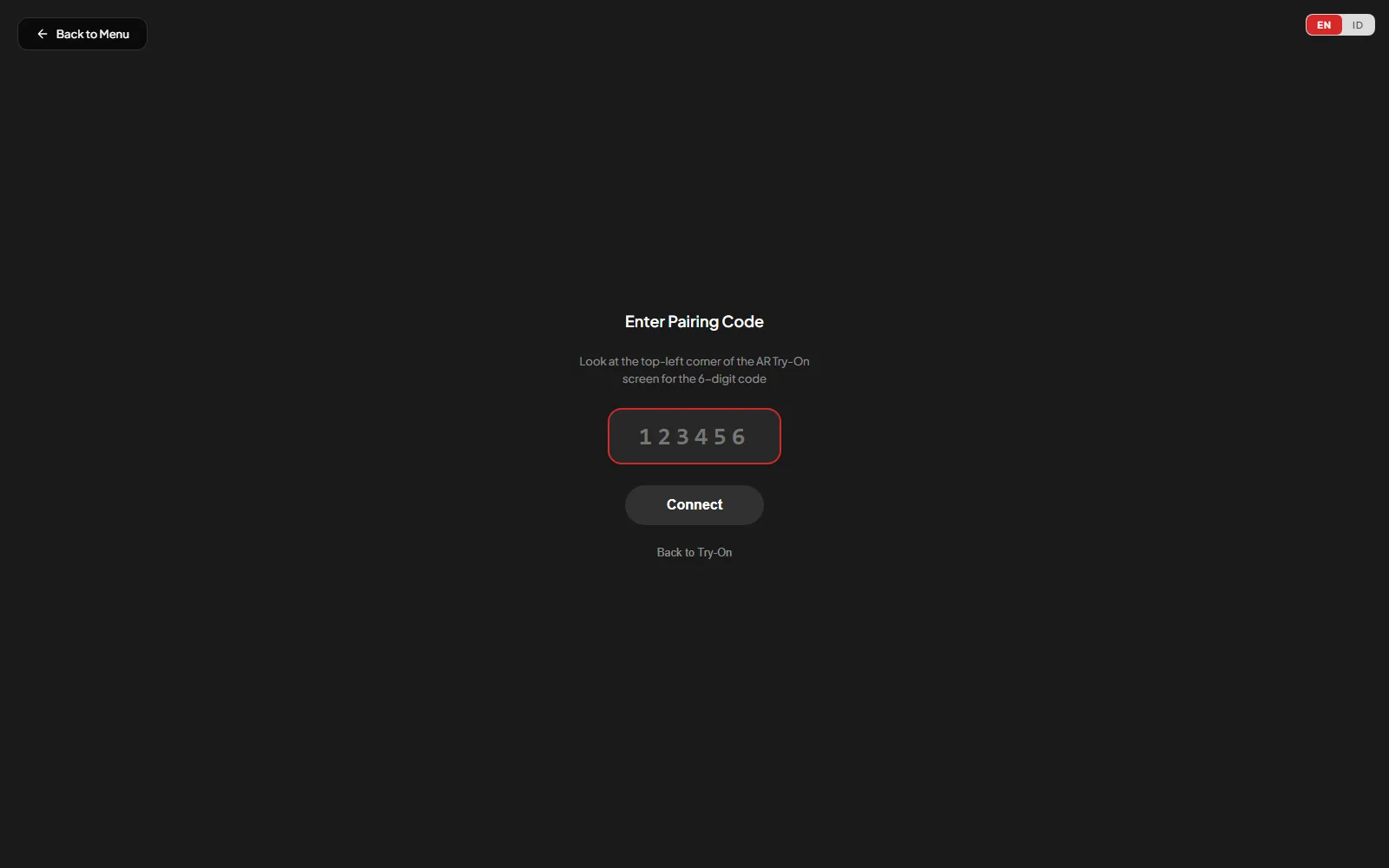
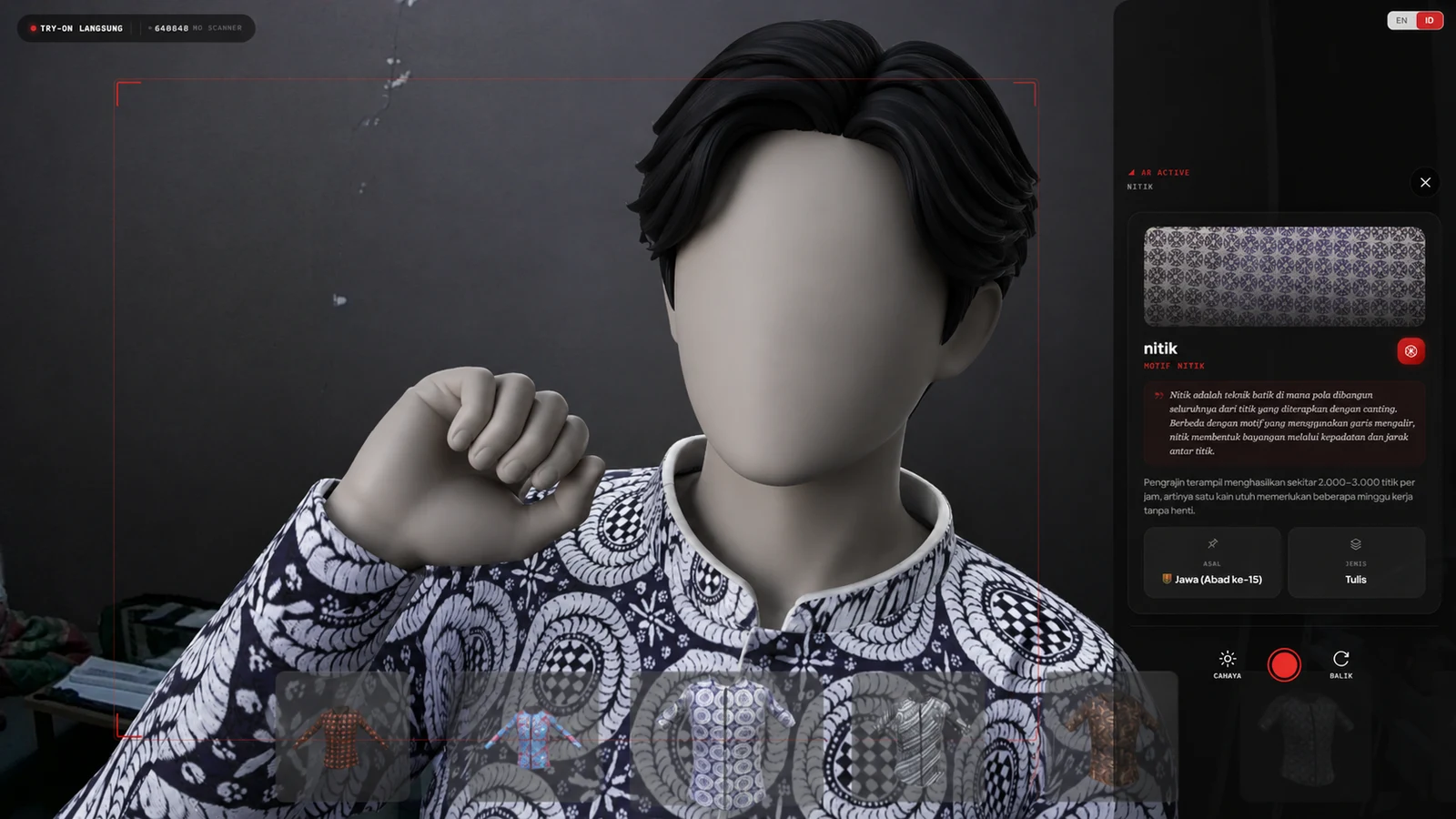
The try-on screen only becomes AR after camera permission: it prints the pairing code, then waits. With a camera granted, the canvas starts and the motif panel reads the same name and century. The still below is the overlay itself, nitik on navy, with origin, technique and lighting controls beside the garment.
What is not proven: recognition accuracy on real cloth - folds, low light, patterned backgrounds - is
unmeasured, and no capture shows a visitor using the kiosk in a real exhibition. Two seams are also visible
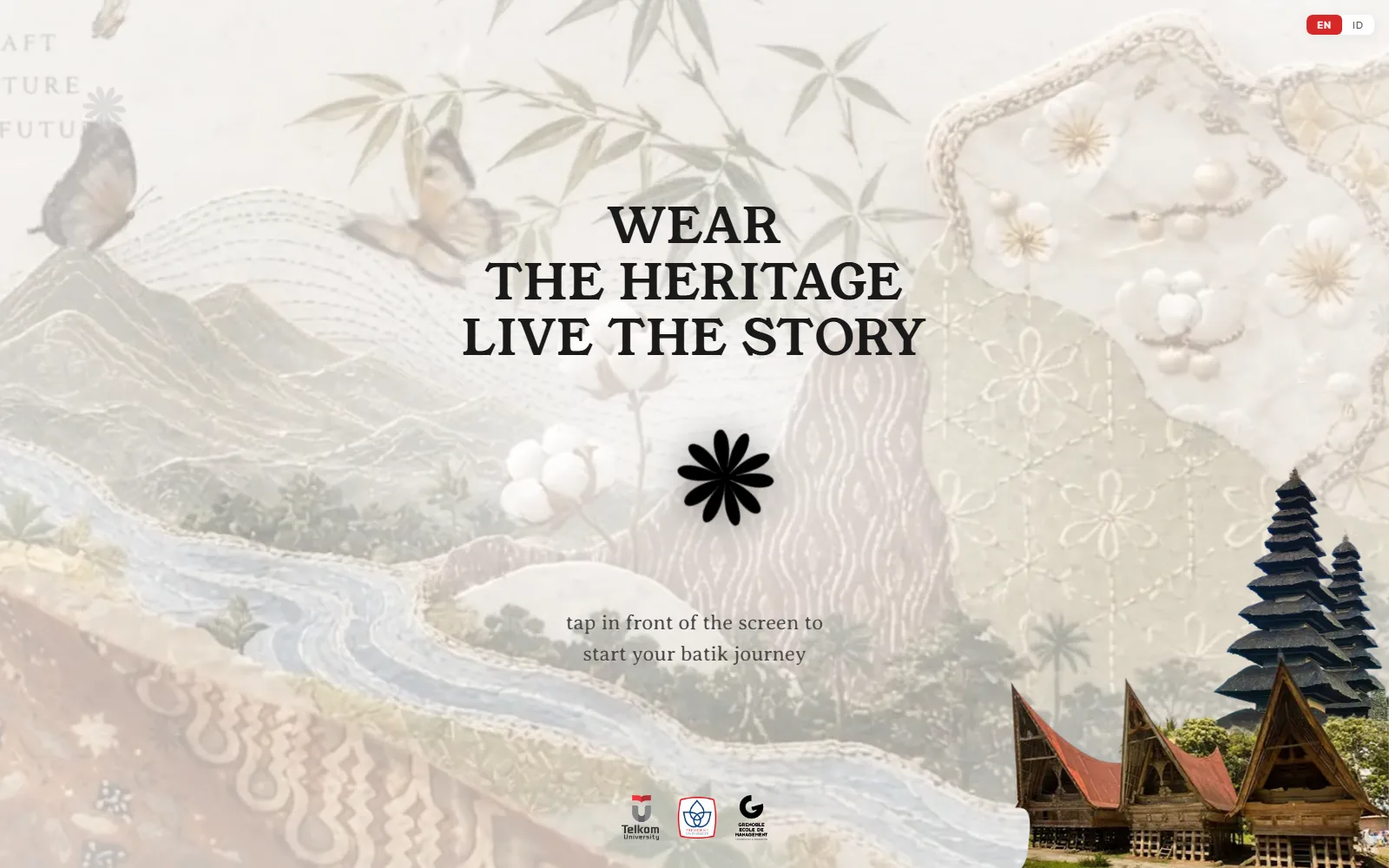
in the live build: the landing's only way in is a paragraph with a click handler rather than a button, and the
preview screen's empty state prints the raw key preview.noPhoto instead of copy.
What I would do next
Measure the scan path before adding motifs: a small labelled set of cloth photos across the 18 motifs, then accuracy by lighting and angle. Fix the two seams in the same pass. A kiosk that fails silently in a crowd is worse than one that explains the retry.